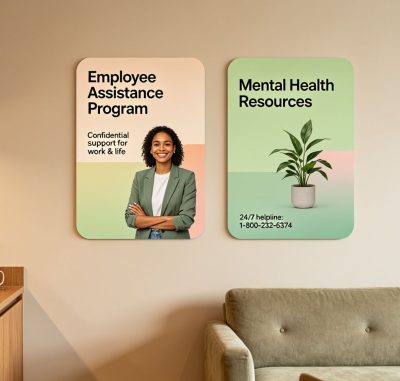
 More than one in five adults in the United States experiences a mental health condition each year, according to National Institute of Mental Health data. In New York City, where millions of residents navigate fast-paced urban life, awareness campaigns remain vital. While digital platforms dominate communication strategies, hospitals, schools, nonprofits, and employers continue to rely on large-format posters. Services like poster printing NYC provide organizations with a tangible way to reach diverse audiences in public spaces.
The Challenge of Digital Saturation
Digital media has transformed outreach, offering instant updates and interactive tools. Yet, research from Pew Research Center shows that constant exposure to online messaging often leads to information fatigue. For mental health campaigns, this poses a challenge: important resources risk being overlooked in crowded social feeds. Posters, by contrast, stand apart from the digital noise. They occupy physical environments like hospital lobbies, subway stations, and school corridors, where people pause, notice, and absorb information without distraction.
Experts note that printed visuals can create a sense of permanence. Unlike a fleeting social media post, a poster remains visible for weeks, reinforcing messages about counseling services, hotlines, or wellness programs. This consistency is crucial for campaigns addressing sensitive topics like depression, anxiety, or suicide prevention, where repeated exposure builds trust and recognition.
Why Institutions Still Choose Posters
Hospitals and clinics often place posters in waiting areas to remind patients of available support groups or crisis lines. New York City Health + Hospitals has used poster campaigns to promote behavioral health services, ensuring patients and visitors see resources at critical moments. Schools, too, rely on posters to normalize conversations about stress and emotional well-being. A study published in the Journal of School Health highlights that visible reminders in classrooms and hallways encourage students to seek help when needed.
Nonprofits and advocacy groups also recognize the value of printed outreach. Posters displayed in community centers or libraries reach individuals who may not have reliable internet access. For employers, posters in break rooms or office corridors serve as discreet prompts, reminding staff of employee assistance programs without requiring them to search online.
The Psychology of Visual Impact
Psychologists emphasize that physical media engages memory differently than digital screens. The American Psychological Association notes that tangible visuals often enhance recall because they anchor information in a specific environment. A poster about coping strategies for anxiety placed near a school counselor’s office becomes part of the setting, reinforcing the association between location and support.
Large-format posters also leverage design principles that resonate with human cognition. Bold colors, clear typography, and concise messaging capture attention quickly. Campaigns often include helpline numbers or QR codes, bridging the gap between print and digital by offering immediate access to resources. This hybrid approach ensures that posters remain relevant in a connected world.
Solutions That Bridge Print and Digital
Organizations are increasingly blending traditional and modern strategies. Posters now often feature interactive elements, such as scannable codes linking to online therapy platforms or mental health webinars. This integration allows campaigns to maintain the visibility of print while expanding the depth of digital engagement. For example, a nonprofit may use posters to advertise a community workshop, while the QR code directs attendees to register online.
Employers in NYC have adopted similar methods, combining posters with intranet announcements. The poster serves as a constant reminder in the workplace, while digital channels provide detailed information. This dual approach ensures employees encounter the message multiple times, reinforcing awareness and accessibility.
Addressing Accessibility and Inclusivity
Printed posters also play a role in inclusivity. Not everyone has equal access to smartphones or reliable internet. By placing posters in public areas, campaigns reach marginalized groups who may otherwise be excluded from digital outreach. World Health Organization guidelines emphasize the importance of equitable communication in public health, and posters remain one of the simplest ways to achieve this.
Language accessibility is another advantage. Posters can be printed in multiple languages, reflecting the diversity of New York City communities. Hospitals and nonprofits often produce bilingual or multilingual materials to ensure that immigrant populations receive critical information in their native language. Campaigns tied to community support at NYC universities highlight how step-and-repeat displays and large-format posters create inclusive spaces, reminding students and faculty that mental health resources are available and visible across campus environments.
The Enduring Value of Print in Awareness Campaigns
Despite the rapid growth of digital media, professionally printed posters continue to serve as reliable tools for mental health awareness. They cut through digital saturation, provide consistent visibility, and engage audiences in physical spaces where support is most needed. By combining print with digital elements, organizations create campaigns that are both memorable and accessible.
Ultimately, posters remain more than just visual displays. They are anchors of awareness, reminders of care, and bridges to resources. In New York City’s diverse and dynamic environment, their role in promoting mental health continues to be indispensable.
Conclusion
Hospitals, schools, nonprofits, and employers across New York City demonstrate that posters are not outdated relics but essential components of modern awareness strategies. Their physical presence ensures that messages about mental health support remain visible, accessible, and impactful. As campaigns evolve, the integration of print and digital will continue to strengthen outreach, ensuring that vital resources reach those who need them most.
Professionally printed posters, whether in subway stations or office corridors, remind communities that help is available. They stand as quiet but powerful advocates for mental health, proving that tangible communication still matters in a digital-first world.