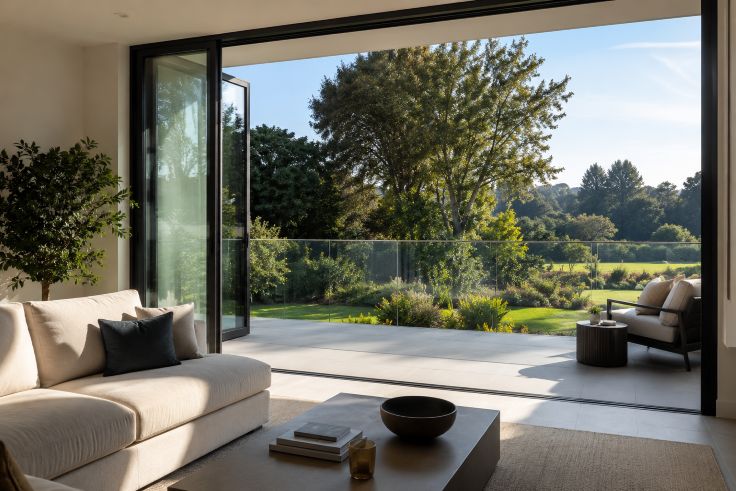
Views of natural environments have been linked with psychological restoration, reduced stress and improved attention. Research summarized by the World Health Organization shows that access to green spaces can support mental well-being through pathways that include relaxation and stress relief. These findings have encouraged architects and homeowners to think beyond interior decoration and consider what people can see from inside a home.
Residential design can support this connection by reducing unnecessary visual barriers between indoor and outdoor spaces. Large windows, glazed doors and transparent balcony barriers can help preserve sightlines toward gardens, trees, hills or other outdoor features. When planning these areas, working with a glass balustrade supplier like Luxury Screens can provide options that meet practical safety requirements while maintaining clear views of the surrounding landscape.
Why Can Looking Outside Feel Restorative?
One of the best-known studies on views and well-being was published in Science in 1984 by environmental psychologist Roger Ulrich. Hospital patients whose windows faced a natural scene had shorter postoperative stays and required fewer potent pain medications than matched patients whose windows faced a brick wall. The setting was healthcare rather than residential design, so the results should not be treated as direct evidence about homes. Still, the study became an important part of research examining how visual environments may influence human responses to stress.
Later findings have strengthened the broader idea that relatively brief exposure to greenery can affect attention. A study published in the Journal of Environmental Psychology examined 150 university students who took a 40-second break while viewing either a flowering green roof or a bare concrete roof. Participants shown the green roof performed more consistently on a subsequent attention task and made fewer omission errors.
This does not mean every outdoor view automatically creates relaxation. The quality of the scene, personal preferences, noise, privacy and surrounding conditions can all shape how a space is experienced. A World Health Organization review of green and blue spaces also found that there is no single type of natural environment that produces the best outcome for everyone.
What Changes When a Home Feels More Visually Open?
Visual openness can affect how people experience the boundary between a house and its surroundings. A room facing a garden may feel more connected to that garden when the view is continuous rather than divided by bulky structures. Similar thinking can apply to terraces, balconies, patios and raised outdoor areas.
This concept overlaps with biophilic design, an approach that seeks to strengthen people’s connection with natural systems within built environments. Research synthesized by Terrapin Bright Green identifies “visual connection with nature” as one of its established biophilic design patterns. Evidence reviewed by the organization associates quality views of nature with reduced stress, improved concentration and more positive emotional responses.
Another relevant concept is prospect, the ability to see across a space or into the distance. Open sightlines can allow residents to observe weather, changing daylight, vegetation and activity beyond the immediate room. These subtle changes can provide visual variety without requiring people to leave the house.
Does Openness Always Make a Home More Relaxing?
There is a competing consideration. Maximum openness is not always the most comfortable design choice. A completely exposed terrace or large window can create concerns about privacy, glare, overheating or feeling overlooked by neighbours. A pleasant view can also become less appealing when it faces heavy traffic, visual clutter or an unattractive neighbouring property.
This is where residential design becomes a balancing exercise rather than a simple pursuit of the widest possible view. Creating thoughtful outdoor boundaries can help homeowners combine a sense of openness with greater privacy and comfort. Screening, landscaping, curtains and carefully positioned barriers can protect more private areas while retaining selected sightlines toward gardens and other pleasant surroundings.
Why the Outdoor Scene Matters as Much as the Barrier
Removing visual obstructions cannot create a restorative environment if there is little worth seeing. Landscaping therefore plays an important supporting role. Trees, planted borders, water features and seasonal vegetation can provide changing colours, movement and natural patterns.
The World Health Organization reports that urban green spaces can contribute to psychological relaxation while supporting broader physical, environmental and social benefits. Its research also emphasizes that successful green-space interventions depend on thoughtful planning rather than simply increasing the amount of vegetation.
For homeowners, this suggests that the interior view and exterior landscape can be considered together. Several practical design choices can influence the result:
- Position seating areas where attractive outdoor views are easy to see.
- Avoid unnecessary visual barriers around gardens and terraces where safety permits.
- Use planting strategically to provide greenery while protecting privacy.
- Consider how the view changes throughout the day and across seasons.
- Balance transparent features with shading where direct sunlight could create glare or excess heat.
Where Visual Openness Fits Into a Relaxing Home
An unobstructed outdoor view is best understood as one part of a wider residential environment. Comfortable temperatures, appropriate lighting, manageable noise, privacy and practical room layouts can be equally important. A transparent boundary cannot compensate for a home that is otherwise uncomfortable.
Research nevertheless provides a reasonable basis for considering visual access to nature during residential planning. Terrapin Bright Green notes that real views of nature are generally preferable to simulated alternatives when applying biophilic design principles, while the World Health Organization continues to recognize links between green environments and health and well-being.
A View Is Part of the Living Space
Home design often focuses on what sits inside the walls, yet windows, balconies and terraces can effectively extend the visual experience beyond them. When those sightlines reveal trees, gardens, open sky or other pleasant surroundings, they may contribute to an environment that feels calmer and less enclosed.
The evidence does not suggest that open views are a universal solution for relaxation. Individual preferences and the quality of the surrounding environment still matter. What it does suggest is that the view from a home deserves thoughtful consideration. By balancing openness with privacy, safety and comfort, residential design can make the outdoors a meaningful part of everyday indoor life.